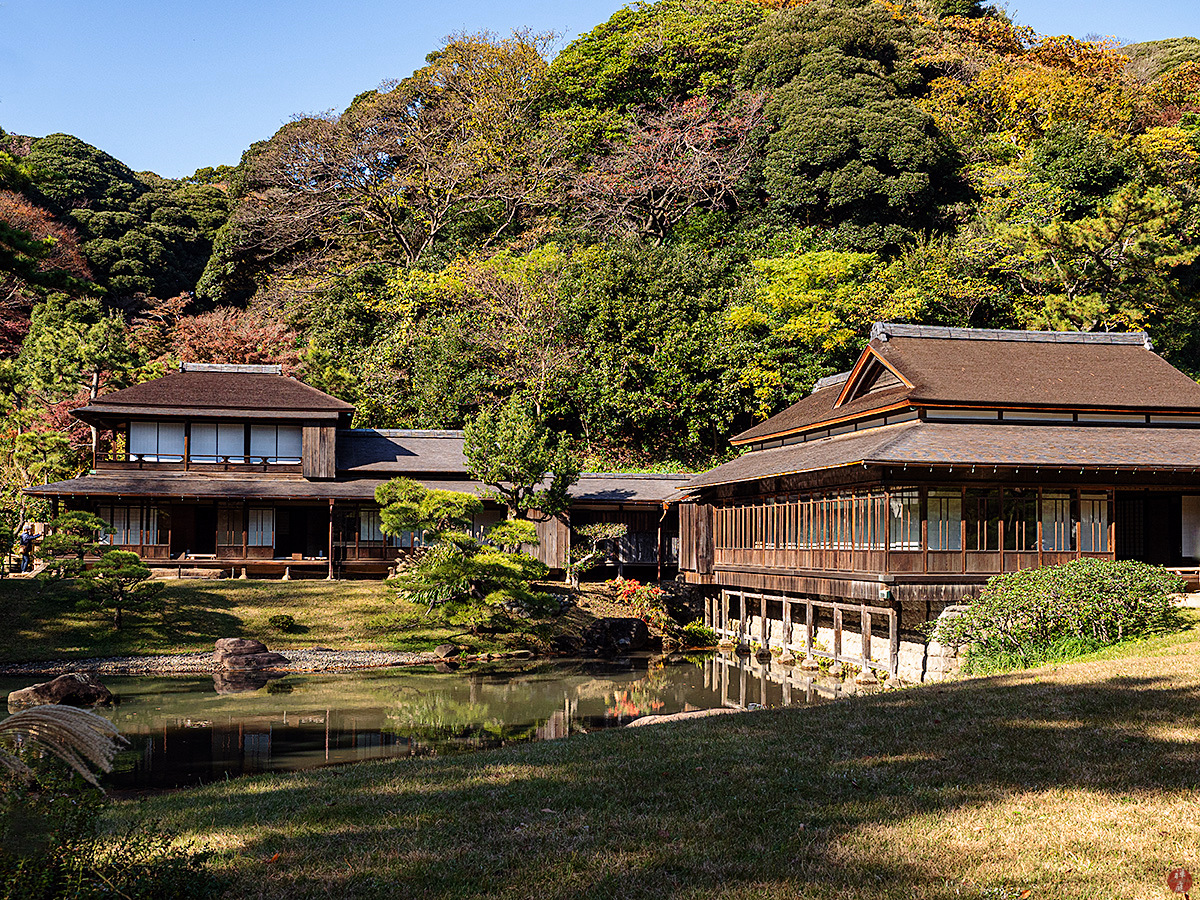
Sankei-en Garden is a vast garden-building complex of various historical buildings, temples, teahouses and traditional Japanese landscape gardens, which is located in the seaside area adjacent Yokohama Port. 17 Japanese historic buildings are located on the about 18ha site. Sankei-en was built in 1906 as the private home of Tomitaro “Sankei” Hara (1869-1939) and was named after his Gago (pseudonym).
It is widely admired for its great aesthetic quality which is equal to that of the Katsura Imperial Villa of Kyoto. It was opened to the public in 1906 through the courtesy of Sankei Hara and, subsequently, its further construction works and landscaping were continued as his life work.
"Sankei" means "three valleys" and is associated with the place name of the location of this garden. He was an extremely wealthy silk trader in Yokohama and one of the leading Japanese industrialists of the Meiji era (1868-1912).
Sankei was a prominent collector of Japanese antiques as well as an outstanding patron of the Japanese art world of his time. He was also an elegant Cha-jin (master of the tea ceremony) and a distinguished Huryu-jin (man of refined tastes) who loved painting and calligraphy deeply.
The elegant building named "Rinshunkaku" (the palace for overlooking spring), which symbolizes this Sankei-en, is calmly bathed in the dull afternoon sunlight of late autumn against the backdrop of rust-colored trees and leaves.
This building is constructed in the Shoin-and-Sukiya-zukuri architectural form which is the combination of Shoin-zukuri (the traditional housing style for the samurai class) and the style of Sukiya-zukuri (the style of a tea-ceremony house).
The building, which was moved from Osaka and formerly called "Hashuken" Kaisho (meeting-palace), was purchased around 1905 and then was reconstructed around 1917 here, adding Sankei's favorite tastes.
Sankei believed that this palace, called Momoyama Goten (Momoyama Palace) by himself, was the remains of the North Palace at Juraku-dai (the residence and office in Kyoto) of the Shogun Hideyoshi Toyotomi in Momoyama period (approx. 1583-1600), which is said to have been designed by Sen No Rikyu.


.jpg "Shin-goten (new palace): Katsura-rikyu (Kyoto)")